
Does Panel Size Actually Matter?
A watt is a watt. Whether you reach 10kWp with 15 large panels or 20 smaller ones, your system produces the same energy. The real question is which panels actually fit your roof – and your roof is probably not as simple as the brochure assumes.
=
10kWp
15
650W
Large Panels
20
500W
Smaller Panels
The Malaysian Home Is Not A Factory Roof
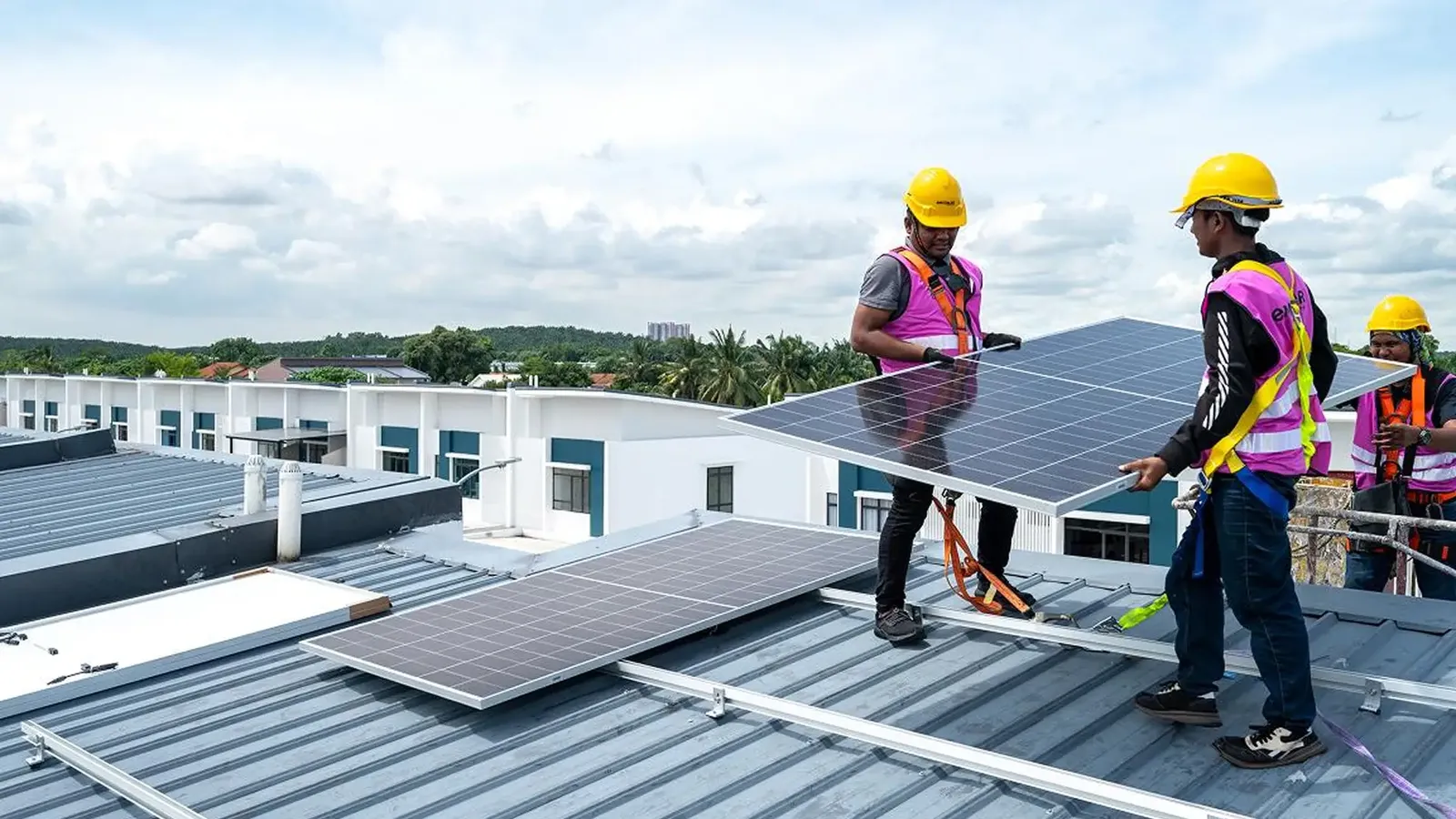
Most solar advertising is optimised for big, flat, uniform surfaces – factory rooftops, bungalows with wide open faces. But walk through any Malaysian housing estate and you’ll see the reality: multiple roof faces angled in different directions, water tanks, skylight panels, vents and awkward corners everywhere.
When your usable roof space comes in irregular sections, panel size suddenly matters – not for the watts it produces, but for how well it fits the space you have.
“ The best panel for your home isn’t the most powerful one. It’s the one that fits your roof without wasting space or overloading your structure. ”
When smaller panels are the smarter choice
Smaller panels give installers more flexibility to puzzle-piece your system together. On a terrace or semi-D with multiple roof sections, this often means you can fit more total panels – and end up with a larger system, not a smaller one.
Smaller Panels
Better for complex roofs
- Less weight loading on roof structure
- Easier to carry and install manually
- Fits irregular sections and around obstacles
- Less wasted roof area
- Can result in a higher total system size
Larger Panels
Better for open roofs
- Lower cost-per-watt to manufacture
- Faster installation on open, uniform roofs
- Better pairing with microinverter systems
- Ideal for bungalows and factory buildings
- Less labour for the installer
Why installers push bigger panels
Here’s a truth the industry doesn’t like to advertise: larger panels are better for the installer’s margins. They cost less per watt to manufacture, require fewer connections, and mean fewer trips up the roof. Faster job, same price.
That doesn’t make them wrong for your home – but it does mean you shouldn’t take the recommendation at face value without asking whether your specific roof layout was actually considered.
In some countries with strict safety regulations, panels above a certain weight must be lifted by crane – requiring permits and adding significant cost. Installers there default to lighter, smaller panels as standard. It’s a useful reminder that “bigger” always has real-world trade-offs beyond the spec sheet.
The right panel for your roof type
Quick reference guide
Terrace/ townhouse
→
Smaller Panels
→
More flexibility, better fit
Semi-detached
→
Smaller Panels
→
Multiple faces, obstructions
Bungalow
→
Larger Panels
→
Open roof, faster install
Factory / warehouse
→
Larger Panels
→
Uniform surface, scale matters
Microinverter system
→
Larger Panels
→
Better pairing
What you should actually be asking about
Panel size is the least important decision in your solar journey. Once you’ve confirmed the size suits your roof, shift your attention to the three things that actually determine whether your system performs – and whether you’re protected when something goes wrong.
1. Manufacturer credibility
Your panels come with a 30-year performance warranty. Will that company still exist in 2049 to honour it? Look at their track record, financial standing, and how long they’ve been in the market – not just the spec sheet.
2. Panel technology
Does it use advanced cell technology like ABC (All Back Contact)? Does it have anti-shading technology – important in Malaysian neighbourhoods where partial shade from trees or nearby buildings is common.
3. Local presence
If your installer closes down – and it happens – who do you call? A manufacturer with a Malaysian office and local support team is much easier to deal with than one that only operates from overseas.
Bigger is not better. Right is better.
Panel size is about fit, flexibility, and your specific roof – not raw wattage. Focus on the brand, the technology, and the local support. The watts will take care of themselves.
Not Sure About Your Roof?
Click the button below to book a no-cost, no-obligation home assessment.