
Where Should You Install Your Solar Inverter?
Your inverter works hard every day. Giving it the right “home” helps it run cooler, last longer and protect your solar returns over time.
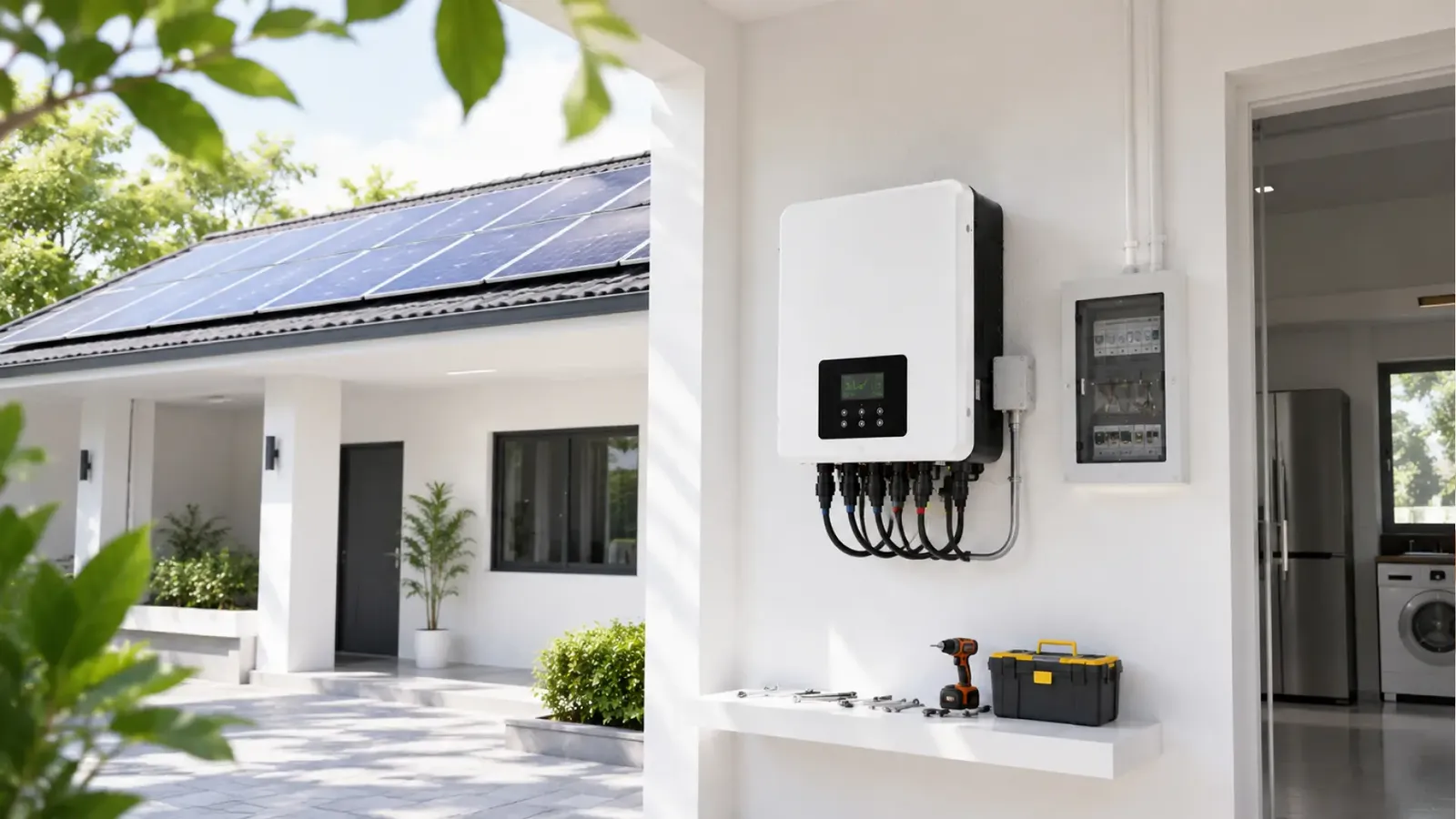
Why inverter placement matters
Your inverter is one of the hardest-working parts of your solar system. It converts solar energy from your panels into electricity your home can use. So where it sits matters.
A good location helps with:
- Better airflow
- Less heat stress
- Easier inspection
- Lower installation complexity
- Better long-term reliability
A poor location can lead to heat, wear, harder maintenance, and avoidable downtime – all of which can quietly reduce your returns.
What makes a good inverter location
Before your installer picks up a drill, these five factors should guide every decision about where your inverter ends up.
Ventilation
Inverters generate heat during operation. A well-ventilated area helps prevent overheating and reduces long-term stress on the unit. This means fewer performance issues and better long-term returns.
Better airflow = better reliability = better savings.
Protection from weather
Your inverter should be protected from direct rain, harsh sun, excessive dust, and moisture. Even if the unit is rated for outdoor use, shelter helps protect it and your returns over time.
Easy access
Your inverter should be easy to inspect. Ideally, it should be installed at a comfortable height so you can easily read the display, check indicator lights, and spot any issues. If it is difficult to access, small issues are easier to miss.
Shorter cable runs
The closer to your distribution board and solar panels, the better. Shorter your cable runs can reduce energy loss, simplify installation, and help manage cost.
Future EV readiness
If you already have an EV, or may get one later, inverter placement matters even more. A good location can make it easier to route wiring for future EV charging without unnecessary rework.
Why we recommend the covered porch
After installing in many Malaysian homes, one location consistently ticks every box: a covered porch. Here’s why it works so well – especially in our climate.
Natural ventilation
Protected from rain, direct sun, humidity and dust
Outside the main living area – no heat or noise indoors
Easy access for inspection
Easy monitor visually
EV-ready – share the same cable route
Why you shouldn’t install it indoors
It might seem convenient – near the meter box, in the utility room, even in a bedroom corridor. But installing your inverter indoors creates three real problems.
It makes your rooms hotter
Inverters release a heat during operation. In our climate, that extra heat is enough to make a room noticeably warmer – and force your air conditioning to work harder than it should.
You'll spend more on air conditioning
This follows from the first point – if your inverter is indoors and raising the ambient temperature, you’ll run air conditioning longer and more often to compensate. That directly offsets some of your solar savings.
The fan noise is more disruptive than you'd expect
Modern inverters run cooling fans that cycle on and off. In a living room, office, or bedroom, that low hum can become genuinely irritating.
The Bottom Line
Your inverter location should not be an afterthought.
The right location helps protect the equipment, reduce heat stress, make maintenance easier, and support better long-term performance.
The right location helps protect the equipment, reduce heat stress, make maintenance easier, and support better long-term performance.
Better placement helps protect your solar returns.