
Malaysia’s Energy Problem Nobody Talks About
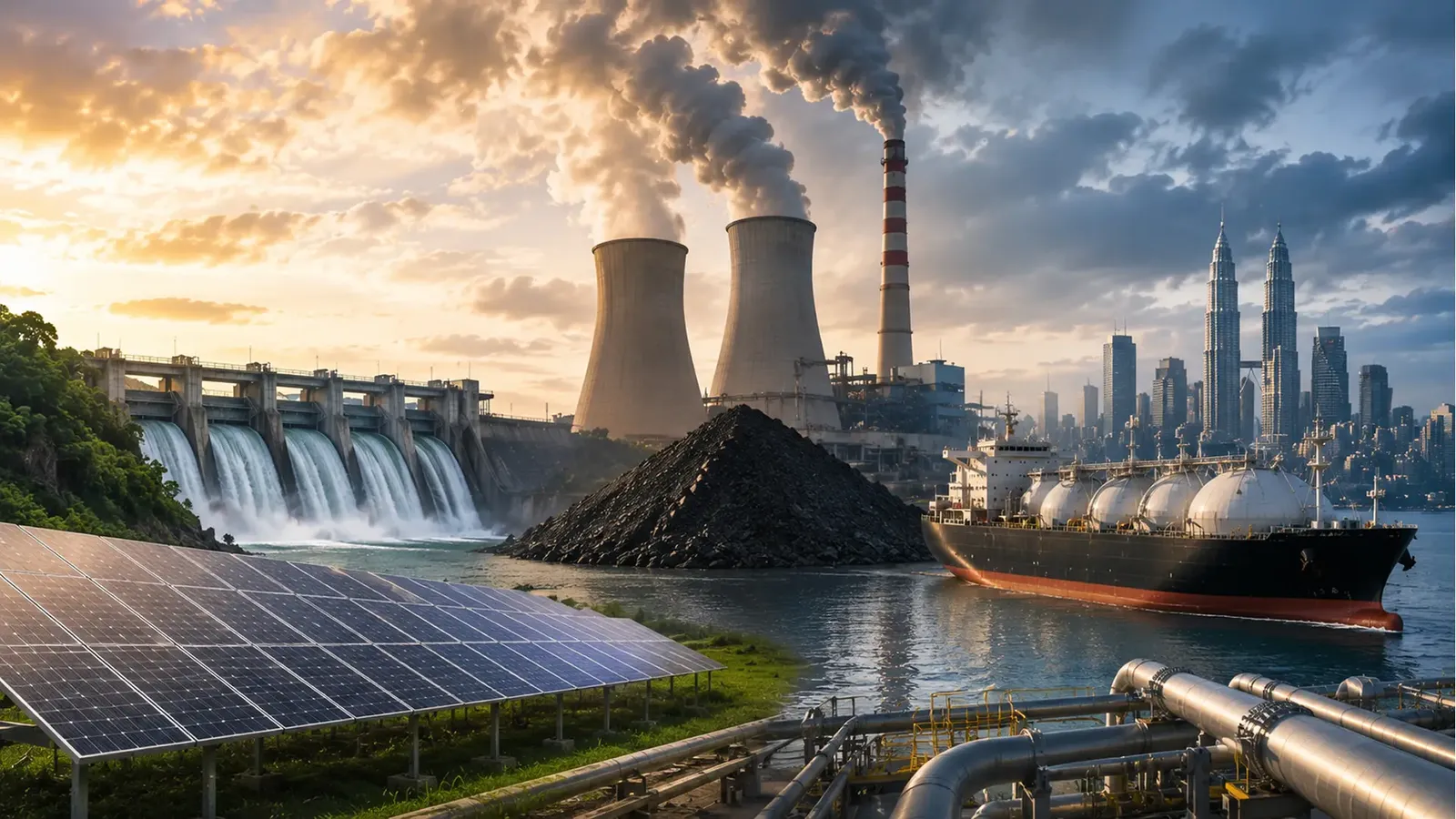
We are thousands of miles from the chaos. But our electricity system is not. More than 60% of Malaysia’s electricity comes from imported coal. That means our power supply is tied to global fuel markets, shipping routes, currency movements and geopolitical tension. That is what solar is not just about lowering your TNB bill. It is about reducing exposure to things we do not control.
The impact nobody connects to home
We are thousands of miles from the middle east. But energy follows supply and demand, and right now, that supply is under pressure
20%
of the world’s liquefied natural gas is currently caught in geopolitical crossfire
25%
of all seaborne oil is being held hostage between warring factions
Many Years
Even after peace, the damage to infrastructure and trust takes years to undo
Source: International Monetory Fund
Even if there is a peace deal tomorrow, the effects could last years.
With tight supply, prices rise. But there’s a more serious scenario: countries restricting exports entirely to protect domestic supply. This should not be shocking, anyone would do the same.
WE'VE SEEN THIS BEFORE
At the start of the Ukraine war, energy prices across Europe surged almost overnight. Families were forced into real trade-offs – keep the lights on or pay the rent.
We didn’t experience that in the same way. That doesn’t mean we’re insulated. It means we got lucky.
What Is “Energy Security” – And Does Malaysia Have It?
Energy security is simple: your energy supply is within Malaysia’s control, at a predictable cost. You are not dependent on another country’s political stability, export decisions, or shipping routes.
By that definition, Malaysia’s answer is complicated.
"We have Petronas with our own oil and gas. But we also need the plants, the infrastructure, and the time to convert that resource into power that reaches your home."
Today, our biggest exposure is clear: imported coal.
Where we stand today
Malaysia’s electricity system is still heavily dependent on imported fuel.
Malaysia’s Monthly Generation Mix, March 2026. Source: Single Buyer.
That imported coal travels on ships, through global waters, and through global markets.
It is exposed to:
- Supply disruptions
- Shipping risk
- Currency fluctuations
- Export controls
- Global price increases
That is our vulnerability: A large part of our electricity system still depends on fuel we do not fully control.
THE REAL RISK
In times of scarcity, coal exporting nations may impose export taxes or simply stop selling to us. Friendly trading partners become less friendly when their own people need fuel.
Solar changes the equation
Malaysia has something many countries don’t:
- Millions of usable rooftops
- Strong sunlight year-round
- No winter collapse in generation
It is a REAL energy resource sitting on top of our homes.
THE SCALE OPPORTUNITY
A single home with solar panels can generate in excess of 500kWh of electricity per month. Scale that to one million homes – still a fraction of Malaysia’s housing stock – and you have 500GWh of monthly generation.
Every unit generated = one less unit from imported coal. Literally.
Why solar is different
Solar removes fuel from the equation. The sun does not respond to war. It does not trade in USD. It does not need to be imported.
Once the system is installed:
- There is no coal to buy
- No gas shipment to secure
- No fuel market to track
- No export tax from another country
- No shipping lane to worry about
That is why rooftop solar matters. Not just for individual savings, but for national resilience.
ON INTERMITTENCY – A SOLVED PROBLEM
Solar only generates during daylight hours and is affected by weather.
But this is already managed globally through grid balancing, battery storage and net metering. We do not need to invent solutions. We need to follow them.
Why is adoption still so low?
This is the uncomfortable part: for most Malaysians, the numbers don’t work. Globally, most households install solar because it saves them money.
In Malaysia, adoption is held back by two realities:
THE REAL CONSTRAINT
- Malaysia’s electricity tariffs are among the lowest in the world – heavily subsidised for decades
- Low tariffs mean lower savings
- Lower savings means longer payback and longer payback slows adoption
THE STRUCTURAL GAP
- Current policies don’t adequately incentivise most households
- The financial case only works well if you’re a higher-usage household
WHAT COULD CHANGE THE EQUATION
- Policy that includes medium and low consumers
- More generous net metering – sell more of what you generate
- A national target that creates urgency and scale
If Malaysians can save money, they will install solar. If they can’t, they won’t. This is a rationale decision for ordinary families. The question is whether policy is designed to make the maths work for everyone, or just for those “rich”.
Where we are on solar policy?
In two words: not fantastic.
Malaysia does have a solar incentive programme – Solar ATAP – and it has helped. Households do save money. But the mechanism is complicated, with multiple friction points that slows adoption and dampens momentum.
THE UNCOMFORTABLE SKEW
The households who benefit most are those with the highest bills which tends to mean higher-income households with larger homes and more appliances.
To be fair, there are genuine reasons the programme was designed this way. Grid upgrade costs are real. Managing electricity cost displacement between solar homes and non-solar homes is a complex policy problem.
The people who made these decisions were not being careless.
But does the policy push the country to adopt more solar? Creating a meaningful reduction in coal dependence and an improvement in energy security requires a very different scale of solar adoption then what it is currently.
What needs to change – and who it needs to change for
WHO IS BEING LEFT OUT TODAY
The majority of Malaysian households who are low-to-medium electricity consumers, do not have a workable solar option under the current policy.
These are not niche cases. These are average families in terrace houses and modest homes who represent the real opportunity for national solar adoption.
The current framework was not designed for them.
Malaysia needs to make a decision: do we want solar to reach the majority of Malaysian homes?
If the answer is yes – and we believe it should be – then everything that follows needs to be designed backwards from that goal.
The Bottom Line
Conflicts will continue. Commodity prices will spike. Exporting nations will, when pushed, put their own people first.
But we can change how exposed we are. Every rooftop that generates its own solar electricity is one less household tethered to the volatility of global energy markets. It is a form of national resilience that no trade agreement and no diplomatic relationship can fully provide
Malaysia has the sun, the rooftops, and the people. The one thing we need now is a policy bold enough to match the opportunity.
Better visibility helps protect your solar returns.